Almost every loyalty program reports healthy sign-up numbers. Very few report healthy usage numbers, and the businesses running them often cannot tell the difference — the dashboard showing members joining is usually far more prominent than the one showing members going quiet.
The 2026 research on customer loyalty makes the size of that gap uncomfortably clear. It has a direct bearing on how any small hospitality business — a café, a coffee roaster, a lunch counter — should design a program in the first place.
Three findings are worth sitting with together.
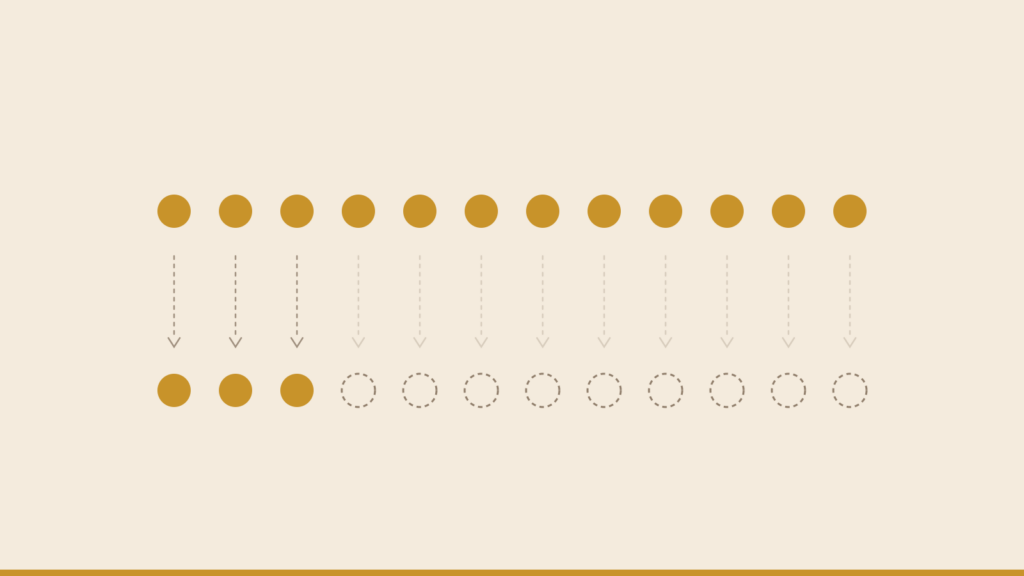
Antavo’s 2026 loyalty research reported that 74% of loyalty program members stopped engaging within two months — while remaining members on paper. They did not cancel. They simply stopped participating, which is a much quieter failure and therefore a much easier one to miss.
Deloitte’s 2026 consumer work found people belong to an average of eight loyalty programs and actively use five. Three of every eight programs someone joins become dead weight in a wallet or on a home screen.
And yet the same body of research shows programs work when they work: Deloitte found 56% of consumers spend more because of a loyalty program, and Antavo reported that 93% of program owners who track return on investment saw a positive one, averaging 5.3x. Loyalty programs are not broken as a concept. They are broken in the specific, measurable sense that most members quietly stop showing up.
Drop-off is rarely a rejection of the offer. It is usually one of four practical failures.
This is the big one. If taking part requires the customer to remember something — open an app, find a card, mention a phone number — the program depends on their memory at the most distracted moment of the transaction. Anything requiring an act of recall from a person holding a phone, a bag and a toddler will fail most of the time.
The pull of a loyalty scheme comes almost entirely from proximity to the next reward. If a customer cannot see that they are two visits away, the mechanic does nothing. Open Loyalty’s 2026 trends research found roughly 81% of consumers interested in visual progress tracking — proximity is the product, and hiding it inside an app the customer opens once a month removes it.
A reward that takes four months to reach is not a reward, it is a rumour. Early momentum matters disproportionately: a member who receives something in the first fortnight has evidence that the program is real. One who does not is running on faith, and faith is what runs out at the two-month mark.
Antavo found 83% of marketers believed their program made members feel valued, against 56% of consumers who agreed. SAP’s 2026 research found 40% of consumers say brands do not understand them as people. A points balance is not a relationship, and customers can tell the difference.
The programs that keep members active tend to share four design decisions, none of which are expensive.
The most useful change most operators can make is to stop reporting sign-ups as the headline number. Sign-ups measure how well you asked; they say nothing about whether the program is doing its job. Four numbers are worth more:
Loyalty statistics circulate widely and are often recycled without attribution, so provenance is worth stating. The figures above come from Antavo’s 2026 loyalty research, Deloitte’s 2026 consumer research, SAP’s 2026 consumer study, and Open Loyalty’s 2026 trends report — the last being a survey of around 170 loyalty professionals rather than consumers, and best read as industry sentiment rather than measured behaviour.
The conclusion holds across all of them regardless: getting people to join a loyalty program is the easy part, and it is not the part that determines whether the program is worth running.
Related reading: why loyalty programs struggle in small hospitality businesses, and what a low-friction café loyalty program looks like in practice.
Want more customers coming back? See how the always-on counter display and branded app work together for your café. Book a demo →